A Monthlong Personal Culinary Journey
Welcome back to part 2 of my recipe series. This week’s focus takes it back to my roots, where I made a popular Persian dish called Khoresh Bademjan.
By way of the Persian culture being so historic comes a rich food scene. Generations upon generations have passed down their recipes and the result is a culture where food and cooking is deeply engrained in everyday life.
Many of you who may be unfamiliar with Persian food may still know about kabobs. These skewers of grilled meat are an extremely popular dish served not just at Persian restaurants, but Middle Eastern restaurants all over. However, lesser known outside the Persian community are Khoresh’s. A Khoresh is a stew over a bed of rice. There are too many types of Khoresh to count, but this week I chose an eggplant, beef (more traditionally lamb) Khoresh.
So putting it all together we have Khoresh = stew and Bademjan = eggplant.
Growing up I would’ve ranked Khoresh Bademjan in the middle tier on my totem pole of Persian dishes. However, as I’ve gotten older, it’s risen through the ranks. I think part of that is because I’ve grown to like eggplant much more. A shout out to this Khoresh, as well as eggplant parmesan, baba ghanoush, and any fried eggplant appetizers with a good sauce.
There were various recipes I found, but my late father’s recipe and this one were the primary ones I followed.
Ingredients
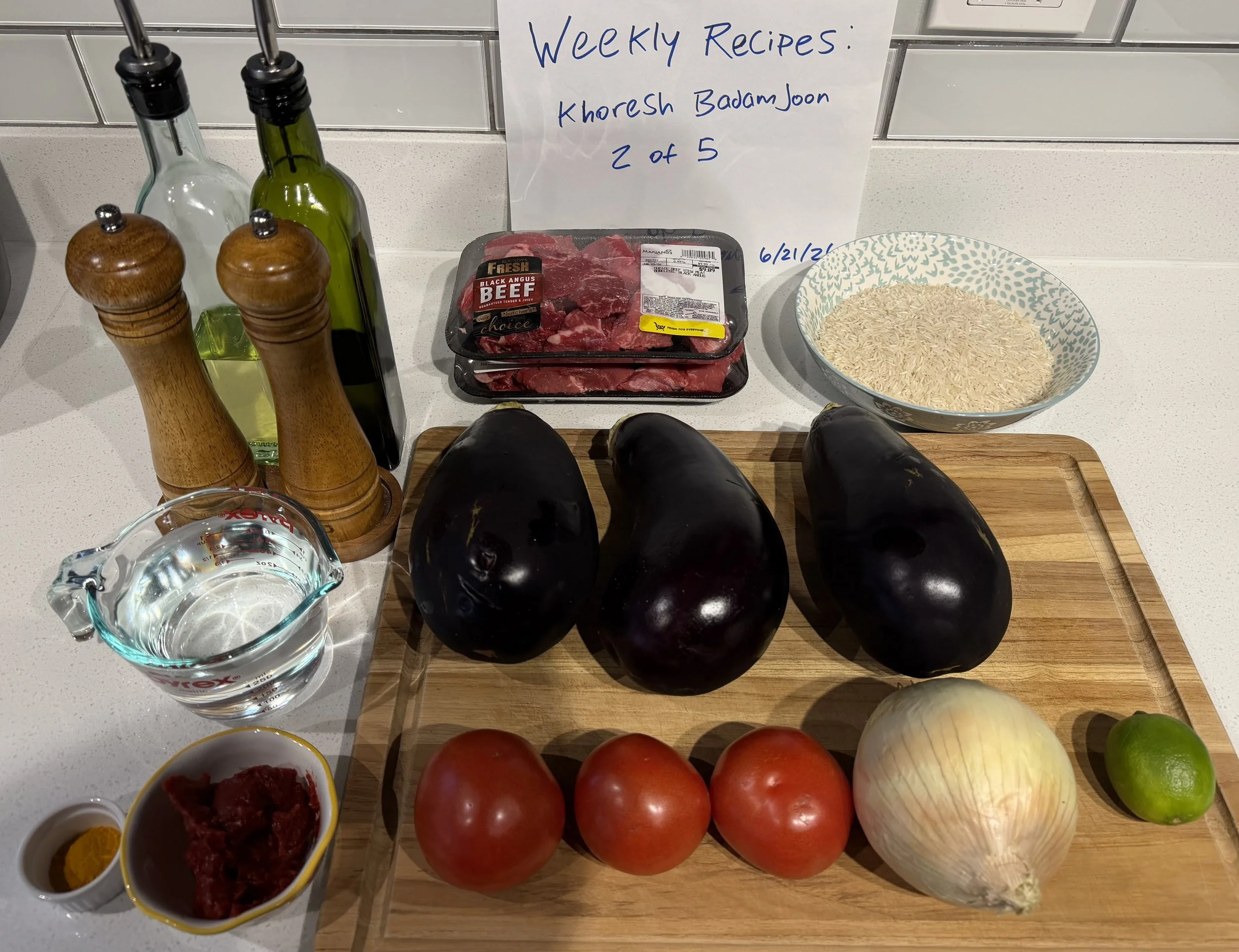
See image below. As mentioned last week, nothing was measured and it was all eyeballed. We go off vibes in this kitchen. Kidding… sort of.
Boneless Beef Stew Chunks — Lamb shank / shoulder / leg is the most traditional route. However, I don’t think I’ve ever bought lamb from a grocer or butcher, so I don’t have a go-to spot to buy it. And to be quite frank, I don’t trust my local grocer’s (Mariano’s) sourcing for lamb or know if they even carry it. What I do recommend is that regardless of the meat you choose, make sure it’s bone-in. It adds flavor. My grocer offered only one type of stew meat and it was boneless beef
Eggplants — Go with thinner or smaller eggplants (e.g., Japanese eggplants) if your grocer offers different varieties
Small or Medium Tomatoes
Yellow Onion
Basmati Rice
Limoo Amani (Dried Lime) — This is an extremely niche product. So if you’re like most of us who are not near a Middle Eastern market and don’t care to venture to one for a single item, then lemon juice or a lime will suffice. However, there is a fairly obvious flavor difference between the substitutes and the real thing
Tomato Paste — Some recipes recommended it, some didn’t
Saffron — Did you really make a Persian dish if it doesn’t have saffron in it? I guess in my case my final dish is disqualified. Sorry, I didn’t want to take a mortgage out to procure the most expensive spice in the world. Jokes aside, saffron is is a staple in Iranian dishes because not only is it a fragrant flavor, but it also adds a beautiful color to your dish. Case in point: the traditional way to prep the platter of rice served as the base for many Persian dishes is to have saffron water poured over the top of the rice to make the top layer yellow. See this image
Turmeric
Water
Salt & Pepper
Oil — Whatever you use for high temp cooking
The Cooking Process
It’s not a complicated cook but it does take some time. For many stews, especially Khoresh’s, that is no surprise because it takes time to cook the various ingredients that make up the stew. And it also takes some time for all those flavors to marry.
60-120 mins: Peeling and slicing the eggplants and then salting them and allowing them to sit to draw out their moisture. The longer they sit the more they sweat (i.e., their water content is released). The whole point of doing this is to intensify the eggplant flavor during the cook and to dry it out, which allows for better browning during the sauté, which again brings flavor.
25-30 mins: Dicing the onion and then browning it in the pot. What follows is adding the stew meat to the same pot and browning it as well. Pouring the water in at the end to allow everything to simmer.
30-40 mins: Sautéing the eggplant slices until they brown. Brown = flavor (i.e., Maillard reaction). Given the volume of eggplant used in this dish, you likely will need to do this part in 2-3 batches so you don’t overcrowd your pan. There should be no slices on top of each other. Each slice should have full contact with the pan.
10-15 mins: Slicing the tomatoes in half and then sautéing them in the same pan used for the eggplant.
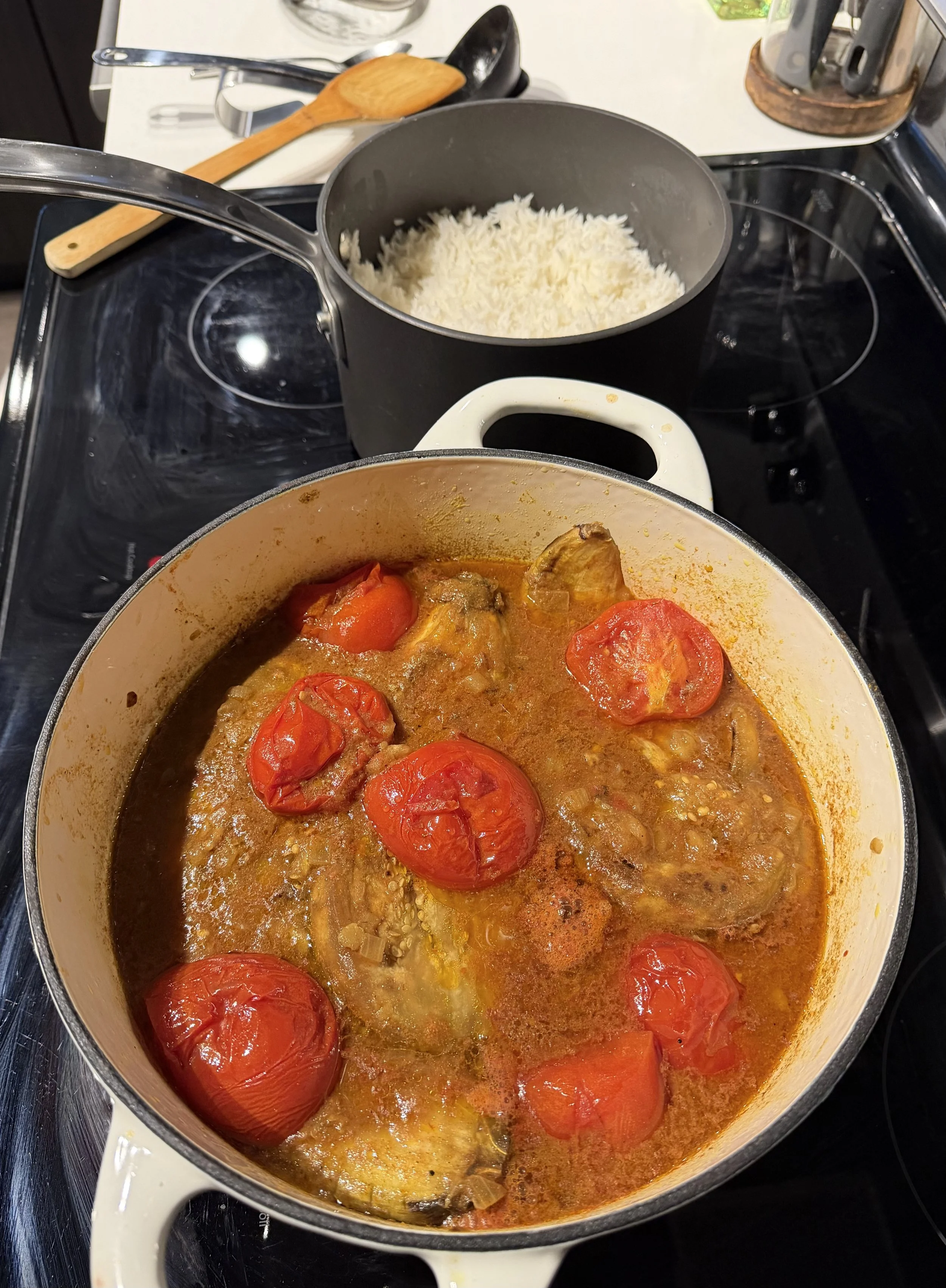
60-180 mins: Letting the stew simmer on low heat for two to three hours. Adding in the eggplant and tomato to the top layer — ensuring they are somewhat submerged — roughly at the halfway point.
Lessons Learned
Cooking this dish brought me back to my childhood. Ooooeeey I love a home cooked dish! There is plenty of room for improvement to get closer to my parent’s level of mastery.
To start, let's discuss the importance of having a reliable source for your ingredients. Find a grocer, butcher, farmer’s market or other vendor that sources quality meat (e.g., in this case we’re talking lamb shank or a bone-in beef stew meat) and eggplant. Listen, by no means am I saying you need to be Farm to Table, but ensure your ingredients aren’t shit and that they’re halfway decent. More importantly, ensure that they actually sell those two ingredients where you normally shop. Earlier I mentioned my dilemna of not having a lamb source, as well as a very limited selection of stew meats. I was able to manage with what I found but when it came to the eggplant, that’s where I fell short. My grocer had a grand total of 4 eggplant on the shelf — all of which were mangled and beat up. They had indents and were bruised with soft spots all over (image below). So I didn’t exactly have the creme of the crop in terms of selection. And more importantly, they were “Globe” variety, which was the exact opposite shape / size I needed. While this lesson learned may sound like me venting, what I’m trying to get across is the importance of ensuring you get the correct ingredients. That starts with ensuring you have a reliable source so that you can avoid settling for inferior products OR having to go to multiple sources.
Beware of the wasteful and time consuming nature of sweating out vegetables. I used two large sheet pans, which can take up a great deal of countertop space. More importantly, I ran through what felt like half a roll of paper towels to pat dry the fronts and backs of the ~12-15 large slices of eggplant. And I went through this process twice because I resalted after the first dry-off. A more seasoned chef likely has better tips on how not to be so wasteful with the paper towels, how not to take up so much kitchen space for this one part of the prep, and how to not to make a mess due to spilling salt all over the damn kitchen. One note on the salt part: use a kosher salt. It will save you lots of time and mess. Do not use a salt grinder because it takes forever and creates more of a mess given the larger, coarser pieces of salt bouncing off surfaces (e.g., food, pans, countertops) more easily than a “traditional” salt.
Use less water. I poured way too much water after browning the beef. Some people like the stew to be more brothy / liquidy (I’d argue that then is a loaded soup). However, I stand firmly on the opposite side. There should not be a bunch of loose liquid. It should all be reduced.
This isn’t a lesson learned from this go round but rather from past cooking and eating experience. As with any stew, the flavors set overnight, and the leftovers usually taste better!
Another tip is to have the optional Sabzi Khordan plate on the side. While I say “optional”, it’s basically tradition to serve this side platter as an accompaniment to Persian dishes, especially Khoresh’s. I grew up having all the herbs and veg (e.g., radishes, green onions, sweet onion slices) with every dish and would stuff my mouth with bunches of herb and onion after every bite of the main dish. You’d think I was a rabbit… anyways, I digress.
Ok on to the most important lesson I learned: make the Tahdig — don’t be lazy. It’s worth it!! Tahdig deserves a whole separate post / recipe. However, for those unfamiliar, it’s a crunchy rice. It’s SUPER popular in Persian dishes. It’s a bragging point, a sense of pride, and for many, the highlight of this dish and many other Persian dishes. I equate it to the guilty pleasure that comes with eating dessert, but it’s like a “savory” dessert. Why I think it’s so critical to have with this dish is not because of tradition. It’s because the crunchiness provides a textural balance. When you serve the dish, you scoop the rice onto your plate and then pour the stew over it. As you progress through your meal, the rice gets mushier because it drowns in the stew broth. Additionally, the stew already has very softened ingredients in the eggplant and beef. So adding the Tahdig brings a nice crunch to the dish.
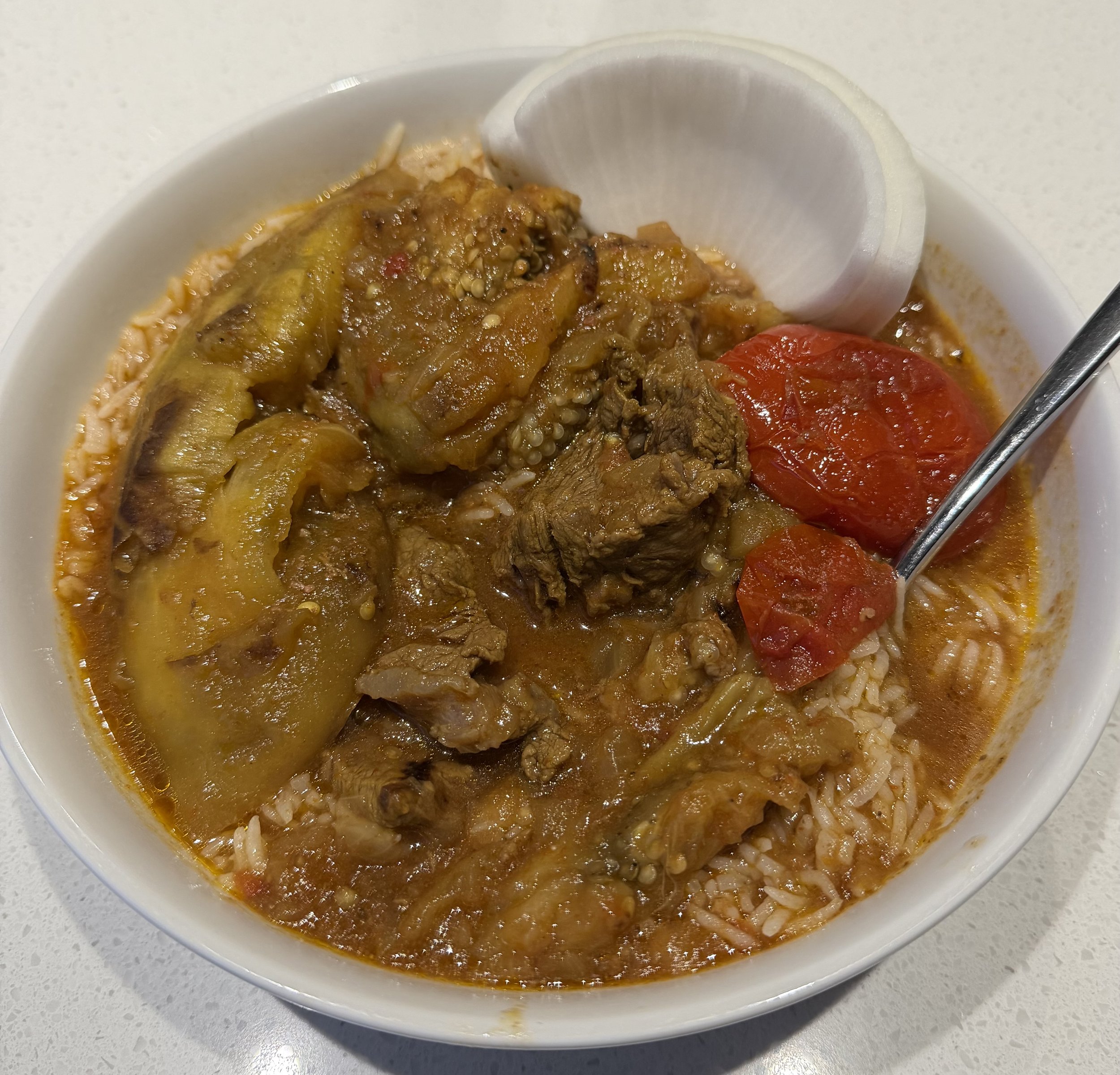
Image of the final output below. Once again I could’ve improved the presenation significantly.
Stay tuned for more dishes!
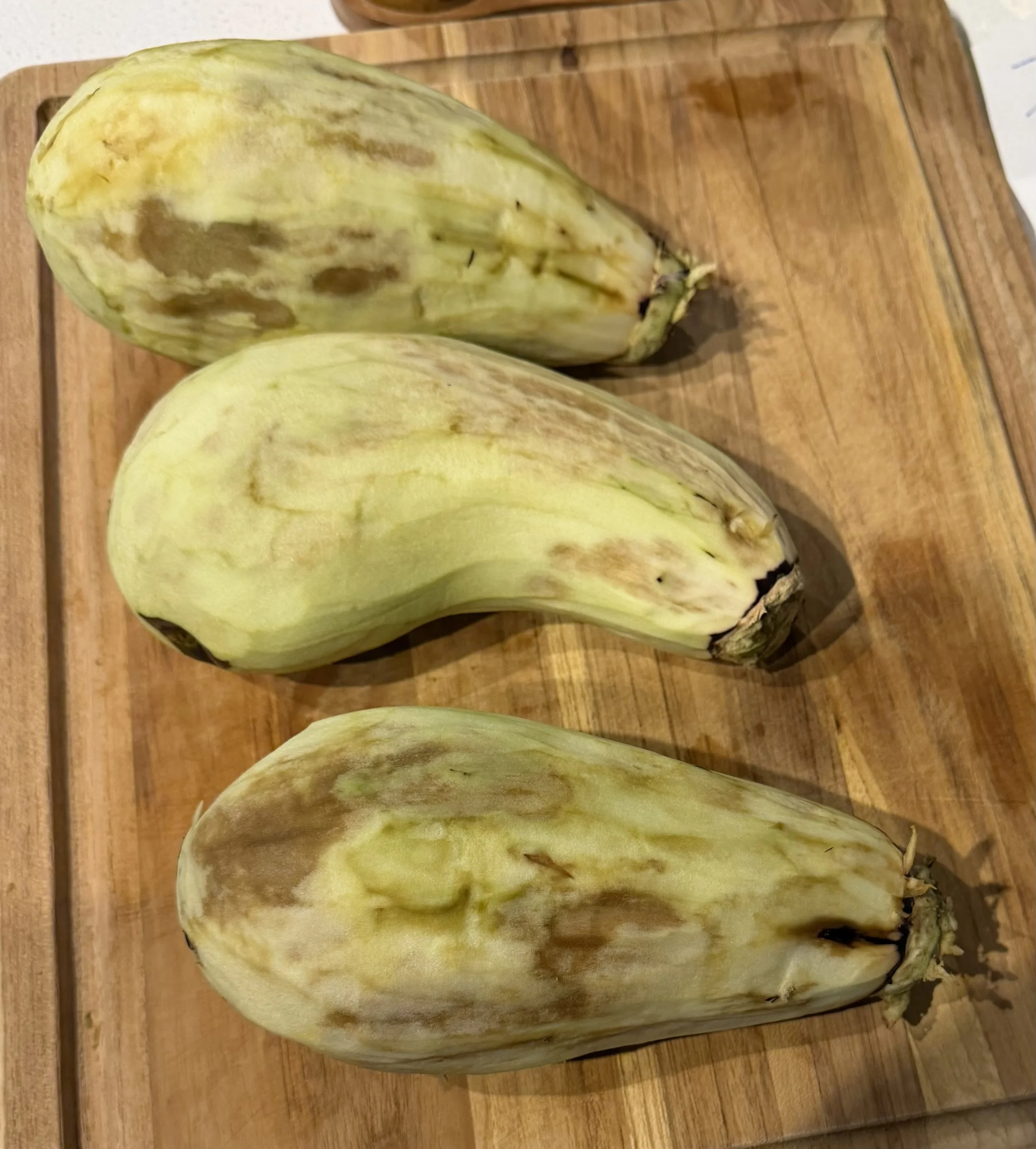
The bruised eggplant selection I had to work with, as mentioned above.